Different types of non electric gravity based water filters and their evaluation
Posted on February 11, 2016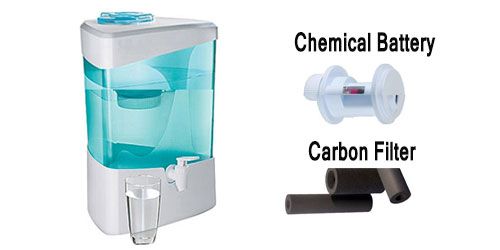
In this article we will talk about non-electric gravity based water filters, their types, their advantages and disadvantages.
Gravity based filters work on the gravitational force from higher compartment to lower compartment. You need to pour water from top in the filter; water shall pass through different components like microfiber mesh, activated carbon and chemicals to get filtered. Purified water can be collected at the bottom of the filter. In this process no external force is used other than gravitation force. There are two types of gravity based water filters
- Basic gravity filters
- Chemical based gravity filters
Basic Gravity Ceramic Candle Filter
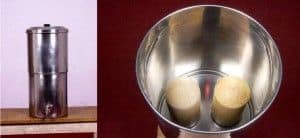
Ceramic candle filters are simple devices made out of clay and used to filter drinking water in order to remove turbidity, suspended materials and some large bacteria. Removal takes place by a physical process such as mechanical trapping and adsorption on the ceramic candles, which have micro-scale pores. Water is poured into the upper of two container and flows through a candle situated in the bottom. Once the water has passed through the candle, it is collected in the lower container. This system both filters the water and provides storage until it is used. The filters are easy to assemble and no energy is required. Maintenance includes frequent scrubbing with a brush and proper care during transport and its use.
The devices consist of two compartments, which allow simultaneous filtration and storage of the filtered water.Outer and inner view of common stainless steel candle filter.
Advantages of Basic gravity filters
- Cheap, simple and easy to use and clean.
- Removes turbidity and suspended solids
- Somewhat effective for the removal of large bacteria
- Improves clarity of water.
Disadvantages of Basic gravity filters
- Does not remove harmful disease causing micro- organisms.
- Does not remove chemical contaminants and color.
- Highly turbid or iron containing water clogs the candle pores.
- Low flow rate.
- Require to boil after filtration to get purified water.
Gravity based filters with chemical capsules
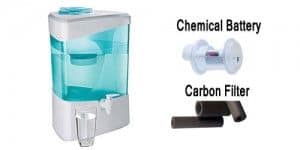
Chemical filters overcome the drawbacks of basic gravity filters. Chlorine is used for removing bacteria and other microorganisms from water. At the beginning, water is passed through a microfiber mesh or through a membrane which will eliminate suspended solids from the water. Predefined quantity of chlorine is then added to this water to kill microorganisms present in the water. Excessive chlorine present in the water needs to be removed therefore it is again passed through an activated carbon filter as activated carbon shall remove the chlorine from water to the consumable levels.
Maintenance cost of Gravity based filters with chemical capsules
For a family of four, maintenance cost can go up to 1600/- Rs. to 2000/-Rs. yearly on the maintenance. A chemical battery along with a carbon filter with 1500 Ltr purification capacity may cost up to 600/-Rs. and fiber mesh costs approx 150-200 Rs. A family of four might need 12 to 15 Ltrs of purified water every day for drinking and cooking. Therefore one battery of 600/- Rs. can last only for 4 months.
Advantages of chemical gravity filters
- Easy to use.
- Removes turbidity and suspended solids, organic pollutants.
- Removes harmful bacteria & viruses in water
- No electricity, No boiling of water.
Disadvantages of chemical gravity filters
- Premature clogging of the filters leads to lack of flow & higher maintenance costs.
- Activated carbon can get saturated and clogged, and then it won’t remove chlorine further.
- Require regular cleaning to prevent tank recontamination.
- The chemical batteries and activated carbon filter and both need to be replaced at regular intervals leading again to high maintenance costs.
Related Products:DewDrop RO purifier