How Poor Water Quality Impacts Food Safety and Shelf Life
Posted on May 18, 2026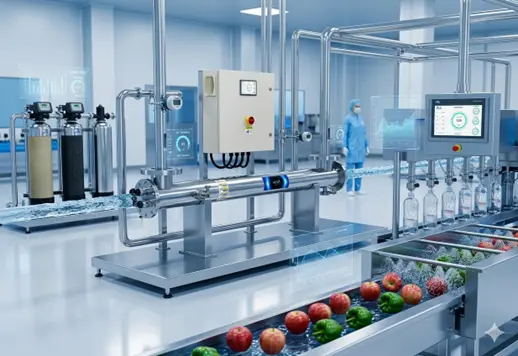
Water is used at every stage of food manufacturing — from washing raw materials and mixing ingredients to cleaning pipelines and processing equipment. If this water is not properly treated, it can carry harmful microorganisms, increase contamination risks, and shorten the shelf life of food products.
According to the World Health Organization (WHO), contaminated food and water contribute to an estimated 600 million cases of foodborne illness and 420,000 deaths globally every year.
How Contaminated Water Enters Food Processing Lines
Water comes into direct contact with food products at multiple stages of food production. Poor water quality can introduce biological, chemical, and physical contamination into processing systems.
Biological Hazards
Biological contamination is the biggest concern in food manufacturing. Harmful microorganisms such as E. coli, Salmonella, Listeria monocytogenes, and Campylobacter can survive in process water and spread across food processing lines through wash tanks, pipelines, storage tanks, and food-contact surfaces.
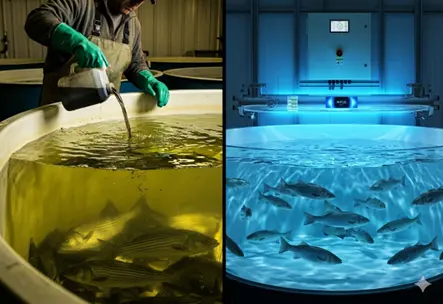
A single contaminated wash tank can expose thousands of products to harmful bacteria in one production cycle. In wet processing environments, microorganisms can also survive inside pipelines and recirculating water systems, making contamination difficult to control.
Chemical and Physical Hazards
Chemical contaminants such as nitrates, arsenic, and heavy metals can enter food processing water through groundwater contamination or industrial runoff. Suspended particles and turbidity also reduce the effectiveness of water disinfection systems because microorganisms can hide behind these particles and survive treatment.
Why Pseudomonas Is a Major Problem in Food Processing
One of the biggest spoilage risks in food processing plants is Pseudomonas contamination.
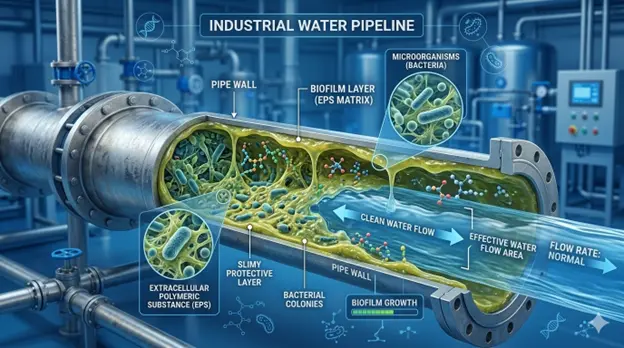
Pseudomonas bacteria thrive in moist environments such as pipelines, valves, storage tanks, drains, and CIP (Clean-in-Place) systems. Chlorination is commonly used to disinfect these systems, but chlorine may leave chemical residue and can become less effective against biofilm-protected Pseudomonas inside pipelines. Once these microorganisms enter food processing lines, they form biofilms — thin microbial layers that stick to internal pipe surfaces and equipment walls.
These biofilms are difficult to remove completely through normal cleaning procedures. During production, parts of the biofilm can break away and re-enter processed water, repeatedly contaminating food products.
This is a major reason why spoilage problems continue even after routine sanitization.
In dairy, beverage, ready-to-eat, and produce processing plants, Pseudomonas contamination can lead to:
- off-odors
- slime formation
- discoloration
- texture breakdown
- package swelling
- early spoilage
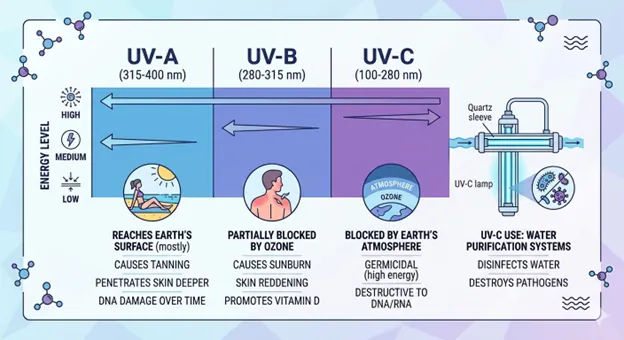
Even low levels of contamination inside pipelines can multiply rapidly during storage and distribution, significantly reducing commercial shelf life. UV disinfection helps control Pseudomonas in process water and pipelines without adding chemicals, making it highly effective for food processing applications.
Where UV Disinfection Is Used in Food Processing
Modern food manufacturers use UV disinfection at multiple stages of the production process to reduce microbial contamination and improve shelf life.
Raw Water Treatment
Food factories often use water from borewells, municipal supplies, storage reservoirs, or rivers. This raw water may contain bacteria and biofilm-forming microorganisms. UV systems are commonly installed after filtration to disinfect incoming process water before it enters production lines.
Ingredient and Process Water
Water used for ingredient mixing, dilution, washing, blanching, and cooking directly contacts food products. If microorganisms enter this water, they can spread quickly throughout the production system. UV treatment helps reduce microbial contamination without changing the taste, odor, or chemical composition of food products.
Produce Washing Systems
Fresh produce washing systems are high-risk contamination points because pathogens from one contaminated batch can spread through the entire wash tank. UV systems installed in recirculating wash-water loops continuously disinfect water and reduce cross-contamination risks.
Beverage and Bottling Lines
In food and beverage manufacturing, microorganisms inside pipelines, storage tanks, and bottling systems can spoil products quickly. UV treatment is widely used before bottling to reduce microbial contamination and improve product stability.
How Poor Water Quality Reduces Shelf Life
Poor water quality does not only create food safety risks — it also reduces product shelf life.
When spoilage microorganisms enter food processing lines, they continue multiplying during storage and distribution. This increases spoilage rates and reduces product stability, even under refrigeration.
Hard water also creates mineral scale inside processing equipment, forming protected areas where biofilms grow more easily. Biofilm-embedded bacteria such as Listeria monocytogenes become harder to remove during cleaning and sanitization.
This is why effective disinfection at multiple stages of food processing is critical for maintaining both food safety and shelf life.
BIS IS 10500 and Food Safety Standards
Under Bureau of Indian Standards IS 10500:2012, water used for food-contact applications must be free from harmful bacteria such as E. coli in any 100 mL sample.
The standard also defines acceptable limits for turbidity, chemicals, and microbial contamination to ensure food safety and hygiene. Compliance with BIS water standards is an important part of Food Safety and Standards Authority of India food safety requirements for food manufacturers.
The Bottom Line
Water quality is not just a utility issue — it is a critical food safety control in modern food manufacturing.
Contaminated water can introduce pathogens into food processing lines, pipelines, storage systems, and wash tanks, leading to repeated contamination and shorter shelf life. Microorganisms such as Pseudomonas can survive inside moist processing environments and continuously re-contaminate products through biofilm formation.
That is why industrial UV disinfection is used at multiple stages of production — from raw water treatment and produce washing to bottling lines and CIP systems.
Proper water treatment, regular microbial testing, and effective disinfection systems are essential for protecting food safety, maintaining product quality, and extending shelf life.