TOC in Water Treatment: Meaning, Reduction Methods
Posted on September 22, 2025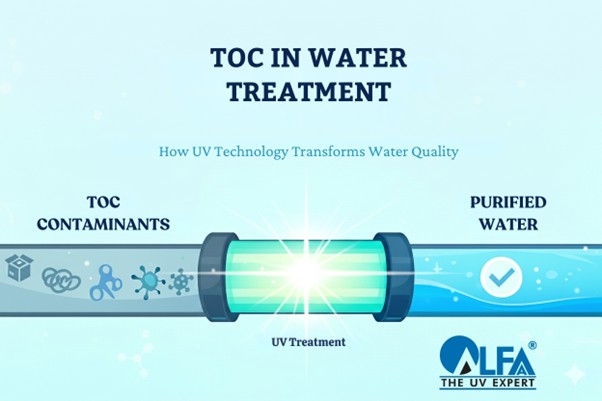
When we think about water quality, minerals, hardness, or microbial contamination usually come to mind. But in industries that demand ultra-pure water, there’s another critical parameter: TOC – Total Organic Carbon.
In this blog, we’ll explore:
- What TOC in water treatment really means
- Why industries like pharmaceuticals and microelectronics care about it
- How TOC can be reduced, and
- Where UV treatment plays a unique role
What is TOC in Water?
TOC (Total Organic Carbon) is the measure of organic carbon compounds in water. These compounds may come from:
- Natural sources (soil runoff, plant residues, microorganisms)
- Industrial sources (solvents, oils, detergents, process chemicals)
- System contamination (plastic leaching, microbial byproducts)
Even when water looks crystal clear, it may still contain trace levels of TOC – and for certain industries, those traces matter a lot.
Why TOC Matters in Industries
Not every sector worries about TOC. It’s mainly pharma and microelectronics where TOC can make or break operations.
- Pharmaceuticals & Biotech
- Compliance: TOC limits are defined by pharmacopeias such as USP <643> and EP 2.2.44.
- Product safety: High TOC can promote microbial growth, which compromises drug stability and patient safety.
- Validation: Regular TOC monitoring is part of GMP validation in water systems.
In pharma, controlling TOC isn’t optional – it’s mandatory.
- Microelectronics / Semiconductor Industry
- Ultra-Pure Water (UPW): Used in wafer cleaning and chip fabrication.
- Defect risk: Even ppb (parts per billion) levels of TOC can leave residues on silicon wafers.
- Economic impact: A single TOC-related defect can result in costly yield losses.
For semiconductor fabs, TOC is a precision and profitability issue. Ultra-pure water standards for microelectronics.
How is TOC Reduced in Water Treatment?
Reducing TOC requires multiple steps, depending on the purity level required:
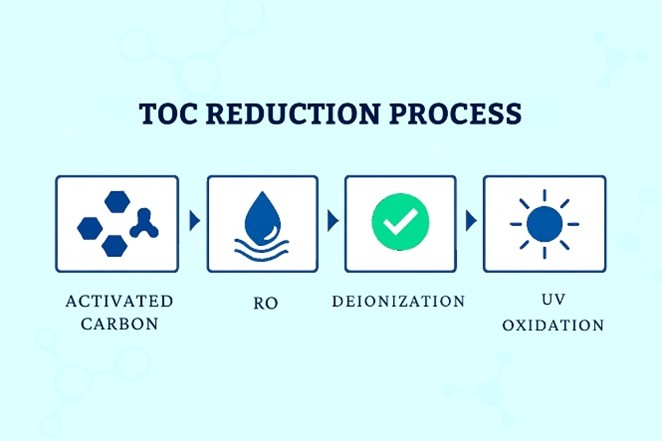
- Activated Carbon Filters → Trap organics through adsorption.
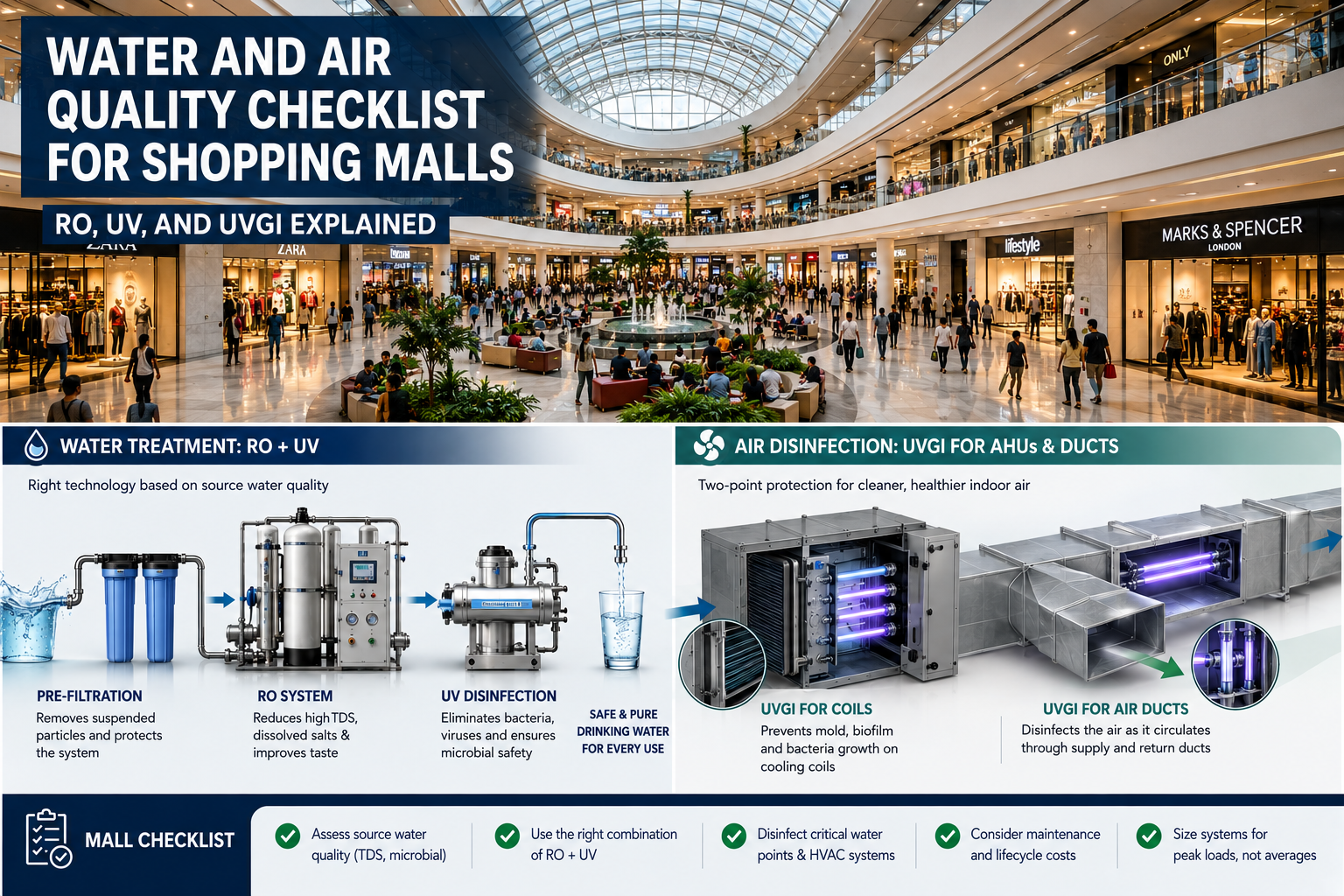
- Reverse Osmosis (RO) → Removes dissolved salts and many organic compounds.
- Deionization & Ion Exchange → Helps polish the water further.
- Advanced Oxidation Processes (AOPs) → Combine oxidants (ozone, H₂O₂) with UV for powerful organic breakdown.
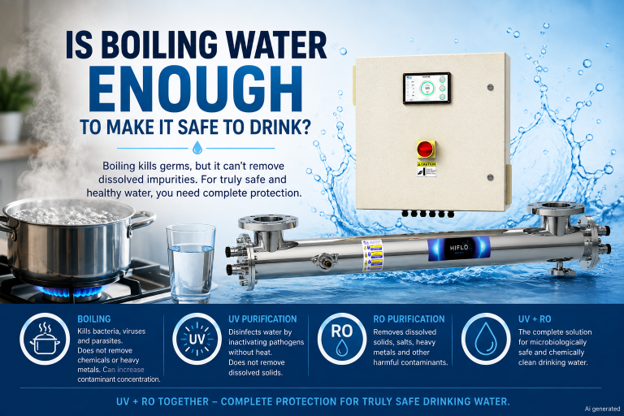
- UV Oxidation (185 nm wavelength) → Breaks carbon bonds, converting organics into CO₂ and water.
Important: UV works best as a final polishing step once water is already clarified, because UV light requires low turbidity to penetrate effectively.
The Role of UV in TOC Reduction
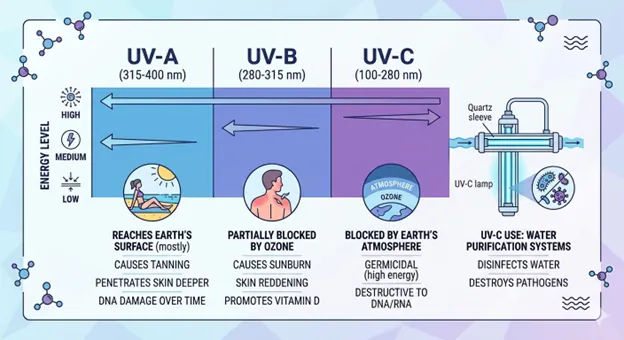
At 185 nm wavelength, UV light goes beyond disinfection – it actually oxidizes organic molecules, reducing TOC.
- In pharma water loops: UV ensures TOC levels stay within pharmacopeia standards.
- In semiconductor fabs: UV keeps UPW systems free from organic residues that cause wafer defects.
- Continuous process: UV can run inline 24/7, ensuring consistent TOC control.
This makes UV systems indispensable for final-stage TOC polishing.
Alfaa UV’s TOC Reduction Solutions
At Alfaa UV, we design solutions for industries where TOC control isn’t just about water – it’s about compliance, precision, and protecting your high-value processes.
Our WWR Series UV systems deliver:
- TOC reduction for pharma: Compliance with USP & EP water standards.
- TOC polishing for microelectronics: Reliable UPW quality for wafer manufacturing.
- Smart design: FloSteer system ensures uniform water flow and UV exposure.
- Operational reliability: Quartz wipers, UV monitoring sensors, and high-output lamps.
Learn more about Alfaa UV’s TOC Reduction Applications
Explore our WWR Series UV Systems for ultra-pure water
TOC in Action: Pharma & Microelectronics
- Pharma case: In a sterile injectables facility, TOC monitoring ensures WFI water meets compliance every batch.
- Microelectronics case: In a fab producing advanced processor, low TOC ensures wafer surfaces stay defect-free, improving yield.
In both cases, TOC is more than a number – it’s a critical quality factor.
Final Thoughts
TOC in water treatment may not matter in everyday applications, but in pharma and microelectronics, it’s non-negotiable.
By combining RO, AOP, and UV polishing, industries can achieve consistently low TOC levels. And with partners like Alfaa UV, TOC reduction becomes not just possible, but reliable.
Because in high-stakes industries, there’s no room for compromise on water quality.
FAQs on TOC in Water Treatment
Q1. What does TOC mean in water treatment?
TOC stands for Total Organic Carbon, a measure of organic contaminants in water. It’s especially important in ultra-pure water applications like pharma and semiconductors.
Q2. Why is TOC important in pharmaceuticals?
Pharma regulations (USP <643>, EP 2.2.44) set strict TOC limits. High TOC can support microbial growth and compromise drug safety.
Q3. How does TOC affect microelectronics?
In semiconductor fabs, even trace TOC can leave residues on wafers, causing defects and reducing chip yield.
Q4. Can UV help reduce TOC in water?
Yes. At 185 nm wavelength, UV oxidizes organic molecules, lowering TOC. It works best as a final polishing step after other treatment processes.
Q5. What are common methods to reduce TOC?
Activated carbon, RO, deionization, advanced oxidation processes, and UV treatment are commonly used together for TOC reduction.