Why Fish Farmers Are Switching From Chemicals To UV Disinfection — And What It Means For Your Seafood
Posted on April 6, 2026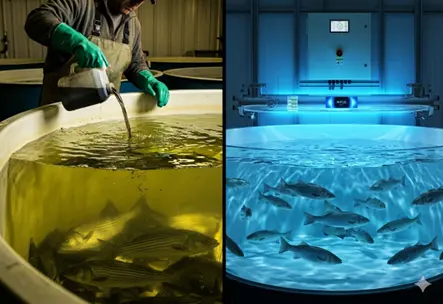
The world is eating more fish than ever before — and the pace is accelerating. Aquaculture now supplies over 47% of all seafood consumed globally, and according to the UN Food and Agriculture Organization (FAO), it holds the title of the world’s fastest-growing food production sector.
Projections suggest that by 2030, fish consumption will increase by more than 20% from 2016 figures, with aquaculture production set to hit 109 million tons — a staggering 37% increase. But behind these impressive numbers lies an uncomfortable reality. The speed of the industry’s growth has outpaced the evolution of its practices, leaving many fish farms still dependent on chemical treatments and methods that raise real questions about seafood quality, food safety, and environmental impact.
The solution, however, already exists. Technologies like UV water disinfection are enabling a new generation of fish farmers to produce more, produce cleaner, and produce sustainably — without the damaging compromises of the past.
The Problem With Chemicals in Fish Farming
For decades, chemicals have been the default solution for controlling bacteria, viruses, fungi, and other harmful microorganisms in fish farm water systems. Common chemical treatments used in aquaculture include chlorine, formalin, potassium permanganate, hydrogen peroxide, and various antibiotic compounds.
While these chemicals do kill pathogens, they come with a growing list of problems that are becoming increasingly difficult to ignore.
Harmful chemical residues in fish: When chemical disinfectants are used repeatedly in fish farming water systems, residues can accumulate in the water and in the body tissue of the fish themselves. This raises serious questions about the safety of farmed seafood — particularly for consumers who eat fish regularly.
Antibiotic resistance: Overuse of antibiotics and antimicrobial chemicals in aquaculture is a major contributor to the global crisis of antimicrobial resistance (AMR). Bacteria that survive repeated chemical exposure develop resistance — creating strains that are increasingly difficult to treat not just in fish, but in humans who consume contaminated seafood.
Toxic byproducts: Many chemical disinfectants react with organic matter in water to produce toxic disinfection byproducts. Chlorine, for example, can form trihalomethanes and other compounds that are harmful to both aquatic life and human health.
Fish stress and mortality: High concentrations of chemical disinfectants cause stress in fish, weaken their immune systems, damage gill tissue, and in excessive doses can lead to mass mortality events — resulting in significant financial losses for fish farmers.
Environmental damage: Chemical runoff from fish farms into surrounding water bodies damages local ecosystems, harms wild fish populations, and pollutes groundwater sources — creating long-term environmental consequences that are difficult and expensive to reverse.
Why UV Disinfection Is the Smarter Alternative for Aquaculture
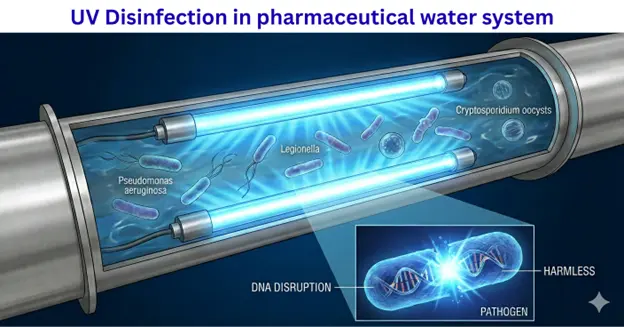
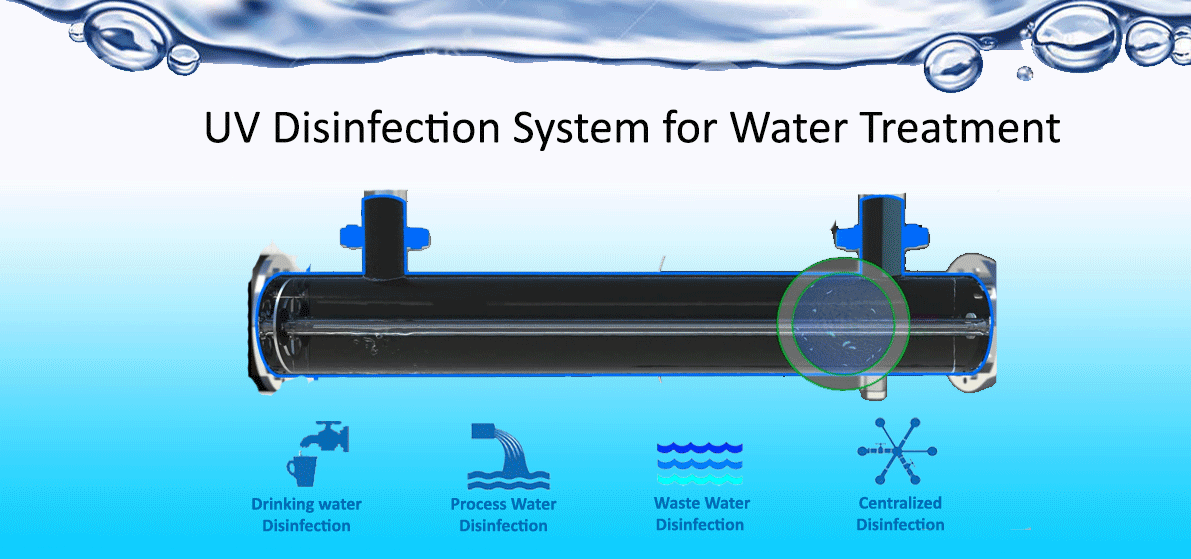
Ultraviolet (UV) water disinfection works on a completely different principle to chemical treatment. Instead of adding substances to the water, UV systems use UV-C light — typically at a wavelength of 254 nanometres — to penetrate the cells of bacteria, viruses, fungi, and other microorganisms and destroy their DNA. This prevents them from reproducing and renders them completely harmless — without adding a single chemical to the water.
This makes UV disinfection for aquaculture a fundamentally cleaner, safer, and more sustainable solution compared to chemical treatment — and it explains why fish farmers around the world are adopting it at a rapidly growing rate.
Key Advantages of UV Disinfection in Fish Farming
1. Completely Chemical-Free — No Residues, No Risk
UV disinfection adds nothing to the water. There are no chemical residues left behind, no risk of accumulation in fish tissue, and no toxic byproducts formed through reactions with organic matter. The water quality — its pH, taste, smell, dissolved oxygen levels, and chemistry — remains completely unchanged after UV treatment.
This means the fish raised in UV-treated water systems are genuinely free from the chemical contamination concerns that are increasingly worrying consumers, food safety regulators, and export markets worldwide.
2. Effective Against Pathogens That Chemicals Cannot Kill
One of the most important — and least understood — advantages of UV disinfection in aquaculture is its ability to destroy pathogens that chemical treatments simply cannot reach effectively.
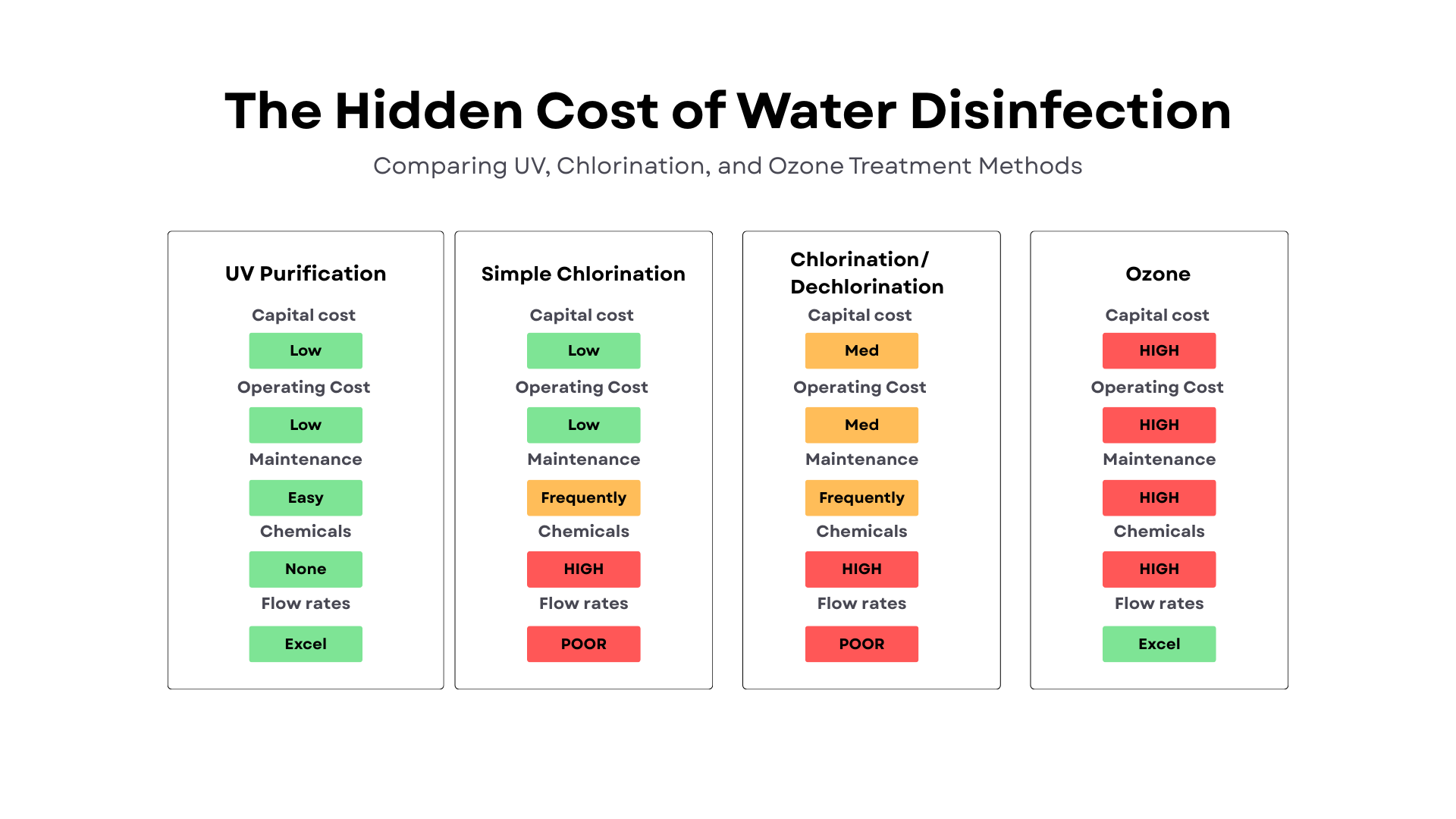
Chlorine, for example, is largely ineffective against Cryptosporidium and Giardia — two waterborne parasites that can cause serious illness in humans. UV-C light destroys both. Similarly, certain viruses and antibiotic-resistant bacteria that have developed resistance to chemical treatment remain highly susceptible to UV inactivation, because UV targets the fundamental biology of the cell rather than relying on a chemical reaction that organisms can adapt to over time.
3. No Impact on Fish Health or Stress Levels
Unlike chemical treatments that can irritate fish gills, disrupt immune function, and cause physiological stress — UV disinfection has zero biological impact on the fish themselves. UV light treats the water as it passes through the UV reactor chamber. The fish never come into direct contact with the disinfection process.
This results in healthier, less stressed fish with stronger immune systems — which in turn leads to better growth rates, lower mortality, and higher quality seafood.
4. Suitable for All Types of Aquaculture Systems
UV disinfection technology is highly versatile and can be integrated into virtually any aquaculture setup — from large-scale Recirculating Aquaculture Systems (RAS) and land-based hatcheries to sea-based cage farms, processing plants, and ornamental fish breeding facilities. It works equally well in freshwater and saltwater environments, making it a universal solution for the full spectrum of aquaculture water treatment needs.
5. Lower Long-Term Operating Costs
While the initial investment in a UV water treatment system requires careful consideration, the long-term operating costs are significantly lower than ongoing chemical procurement, storage, handling, and disposal. There are no chemical supply chains to manage, no hazardous materials handling requirements, and no regulatory compliance costs associated with chemical discharge.
A well-designed UV disinfection system for aquaculture runs continuously, requires minimal maintenance, and delivers consistent pathogen control — day after day, year after year.
What This Means for the Seafood on Your Plate
The shift from chemical to UV-based water treatment in fish farming has direct implications for seafood safety and quality that every consumer should understand.
Fish raised in UV-treated water systems are free from chemical residue contamination. They grow in clean, pathogen-controlled water that closely mirrors natural aquatic conditions. They experience lower stress levels throughout their life cycle — which directly affects meat quality, texture, and taste.
For India’s growing export-oriented aquaculture sector, UV disinfection is increasingly becoming a requirement rather than a choice. Major seafood importing countries in Europe, the United States, and Japan have progressively tightened their standards around chemical use and antibiotic residues in farmed fish — and Indian exporters who want access to these premium markets need to demonstrate clean, chemical-free production practices.
The Coastal Aquaculture Authority (CAA) mandates biosecurity measures and disease control across all licensed coastal farms, while MPEDA’s SHAPHARI certification requires demonstrated antibiotic-free production for export-oriented operations and FSSAI seafood safety guidelines outline India’s evolving standards for chemical residues and microbial safety in farmed seafood — standards that UV-treated aquaculture systems are uniquely well-positioned to meet.
Key Factors to Consider When Installing UV Disinfection in a Fish Farm
Switching to UV disinfection is not simply a matter of installing any UV system — proper design and sizing are critical to achieving the desired results. Several important technical factors must be evaluated carefully.
Pathogen targeting: Different fish species and different farm environments present different microbial threats. The UV system must be calibrated to deliver the correct dosage to inactivate the specific pathogens of concern — not just a generalised treatment level.
UV Transmittance (UVT): The clarity of water in a fish farm affects how effectively UV light can penetrate it. Water with high turbidity, suspended particles, or elevated iron content absorbs UV light before it can reach and inactivate microorganisms — requiring a more powerful system or pre-treatment of the water before UV exposure.
Flow rate and contact time: The water must pass through the UV reactor at a controlled flow rate to ensure each volume of water receives a sufficient UV dose. Systems that allow water to flow too quickly may under-dose, leaving pathogens alive and active.
Water temperature and salinity: These parameters affect both the types of pathogens present and the efficiency of UV penetration — and must be factored into system design for marine aquaculture applications.
System material selection: For saltwater aquaculture environments, UV systems must be constructed from corrosion-resistant materials. High-density polyethylene (HDPE) is typically preferred for marine applications, while stainless steel is well-suited to freshwater setups.
How Alfaa UV Supports the Aquaculture Industry
With nearly two decades of experience in UV water purification technology, Alfaa UV provides UV disinfection systems for aquaculture that are designed to meet the specific challenges of fish farming — delivering effective, chemical-free pathogen control that protects fish health, maintains water quality, and ensures the safety of the seafood produced.
Alfaa UV’s industrial UV systems are built for continuous operation, engineered for easy installation and minimal maintenance, and designed to comply with the most stringent water quality and food safety standards. Whether you are setting up a new fish farm, upgrading an existing water treatment system, or seeking to meet export market requirements for chemical-free production — Alfaa UV has the expertise and the technology to support your operation.
Conclusion
The fish farming industry is at a turning point. Growing consumer awareness, tightening regulatory standards, increasing antibiotic resistance concerns, and the rising demand for clean, safe, and sustainably produced seafood are all pushing aquaculture away from chemical dependence and towards cleaner, more responsible water treatment technologies.
UV disinfection is not just a trend — it is the direction the entire industry is moving. It delivers better fish health, cleaner water, safer seafood, and lower environmental impact — all without a single drop of chemical added to the system.
For fish farmers in India looking to produce higher-quality seafood, access premium export markets, and build a more sustainable operation — the switch to UV water disinfection is not just a smart decision. It is increasingly becoming an essential one.
Alfaa UV (Ace Hygiene Products Pvt. Ltd.) — ISO 9001 certified. India’s leading UV water and air purification expert. Headquartered in Mumbai with a manufacturing facility in Talegaon, Maharashtra. Serving industrial, commercial, municipal, and aquaculture sectors across India and exporting to 15+ countries worldwide.