Indoor Air Quality in Hospitals – A Growing Concern
Posted on October 24, 2017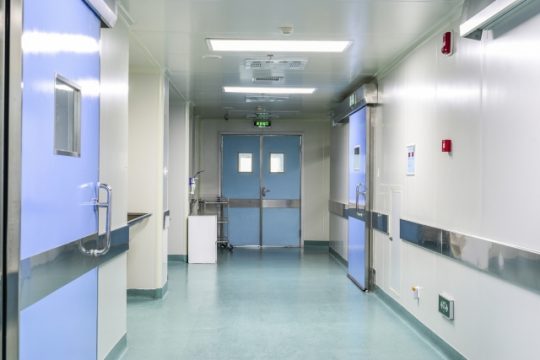
Healthcare facilities and hospitals have to pay particular care to indoor air concerns. With outdoor air pollution becoming worse every year, maintaining good indoor air quality at hospitals has become even more challenging but no less important. Indoor air quality (IAQ) encompasses a wide variety of factors such as humidity, temperature, quantity, the presence of chemicals and other contaminants, and the quality of outdoor air brought inside. These are typical metrics used to define IAQ.
To add to this, hospitals are normally served by a centralized HVAC system, with ducts distributing cooled air to various compartments, wards, rooms etc. The presence of microorganisms in the air, especially those from sick patients circulate freely from one area to another and result in cross contamination which poses a grave risk to patients with compromised immunity, along with doctors, nurses, visitors, and staff.
Effect On hospital staff productivity
Hospitals with poor or ineffective HVAC systems are at a higher risk of incubating illnesses caused by airborne contaminants, and these illnesses will have a debilitating effect on the productivity of hospital staff as they will either have to work at reduced capacity or miss work entirely due to respiratory illnesses. Patients who suffer from diseases may be a source of contaminants that can settle on surfaces or clothing and become airborne, thus affecting other people in the facility
Poor IAQ Effect On the health of patients
Poor air quality may also affect patients at the hospital. Hospital cleaning staffs often use high-grade chemicals to clean rooms and surfaces. These chemicals may create toxic gases that become airborne and can affect the well-being of patients, especially those with compromised immune systems.
Technology used to improve Indoor Air Quality (IAQ) of Healthcare Facilities
Ultraviolet Germicidal Irradiation (UVGI) is a proven method for removing volatile organic compounds(VOCs), and for killing or deactivating bacteria, viruses, mold spores and other pathogenic microorganisms that may be present in room air.
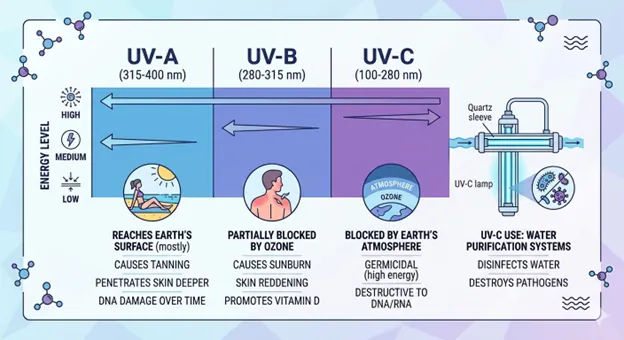
Ultraviolet light is electromagnetic radiation with a wavelength of 254 nanometer which is capable of breaking molecular bonds within microorganismal DNA. UV technology is superior to traditional disinfection in many ways. However, proper validation is a prerequisite for the success of UV technology in air disinfection .
Benefits of Alfaa UVGI Air Disinfection systems
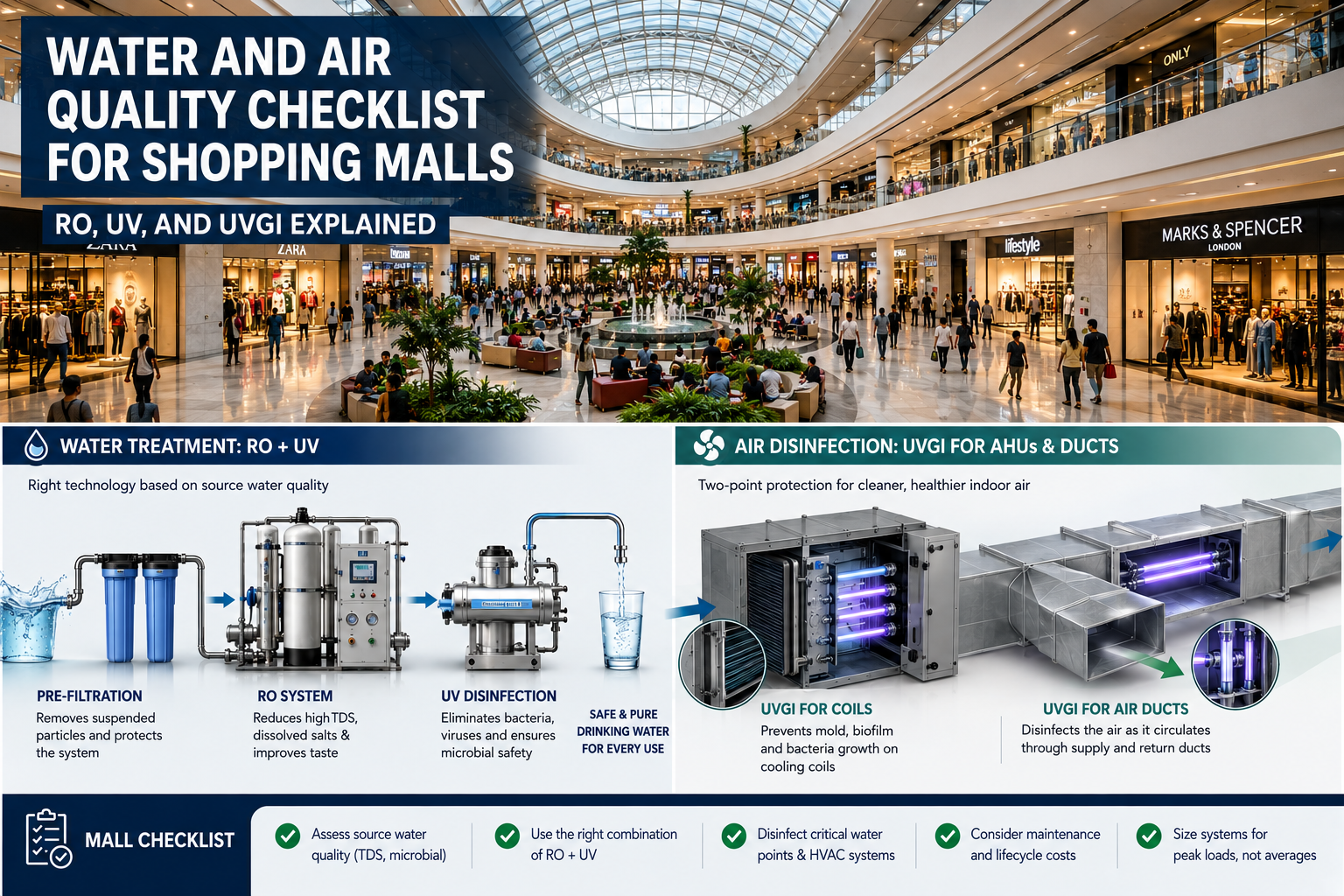
- Better Indoor Air Quality (IAQ): Alfaa UVGI air disinfection systems in HVAC ducts greatly improves Indoor Air Quality(IAQ) in hospitals and other healthcare facilities by destroying harmful airborne contaminants such as bacteria, viruses, molds, fungi, allergens and VOCs which are responsible for “Sick Building Syndrome” caused due to cross contamination/cross-transmission.
- Greater Savings: The use of Alfaa UVGI air disinfection systems in air handling units (AHUs) is highly effective in maintaining a clean evaporator and coils by preventing the growth of bacteria on the coil surfaces. This enhances the energy efficiency of the AHU, resulting in reduced energy costs and lower maintenance costs.
- Eliminate Odors: The use of Alfaa UVGI air disinfection systems reduces unpleasant odors which may result from outside air or re-circulated air within the building
Infections acquired in Hospitals (HAI) can be a significant cost for the healthcare industry and is considered a preventable injury. Alfaa Ultra IAQ UVGI air disinfection systems are the ideal tool to help reduce nosocomial infections.
Awards and Accolades
Alfaa UVGI air disinfection systems have been awarded the ASHRAE ACREX Award of Excellence in the category of Indoor Air Quality (IAQ) both in 2016 and 2017.