Is boiling water enough to make it safe to drink?
Posted on August 13, 2026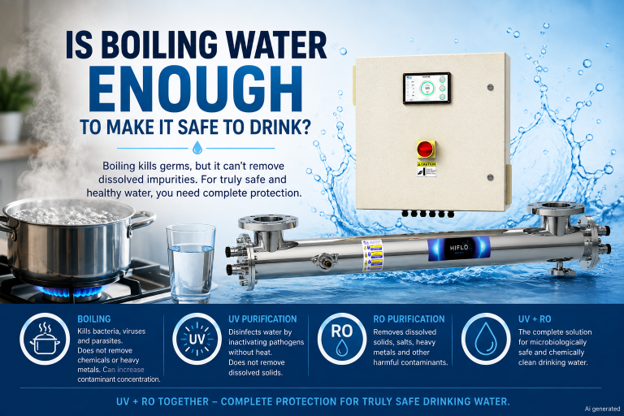
Boiling water is one of the oldest and most trusted ways to make water microbiologically safe. It helps inactivate disease-causing organisms such as bacteria, viruses, and parasites, which can reduce the risk of waterborne illness. According to CDC guidance, bringing water to a rolling boil for one minute is generally enough to address biological contamination. At higher altitudes, the recommended time increases to three minutes.
But safe drinking water is not only about microorganisms. Water can also contain dissolved salts, chemicals, heavy metals, hardness, or other contaminants that boiling does not remove. In some cases, boiling may even concentrate dissolved contaminants because water evaporates while dissolved solids remain behind.
That is why understanding your source water matters. If the concern is only microbial contamination, boiling can be an effective short-term measure. But where water has high total dissolved solids, hardness, industrial contamination, or heavy metals, boiling alone does not provide complete protection.
Where RO helps
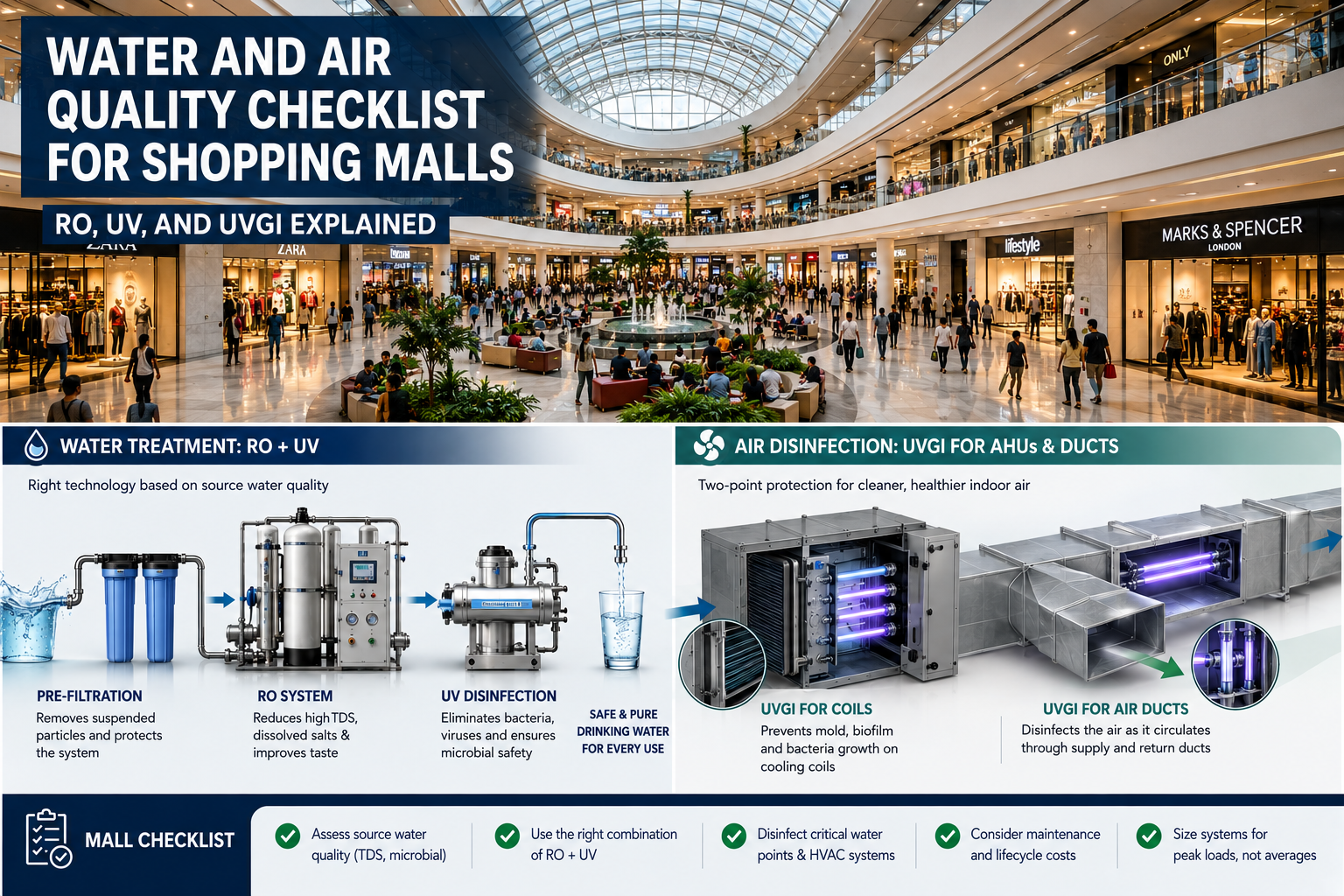
Reverse osmosis, or RO, helps address dissolved impurities that boiling and UV do not remove. RO membranes are designed to reduce dissolved salts, heavy metals, and other impurities that can pass through basic disinfection methods. This makes RO especially relevant when source water has elevated TDS or chemical contaminants.
Where UV helps
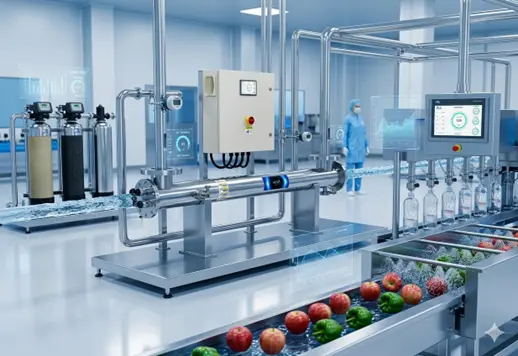
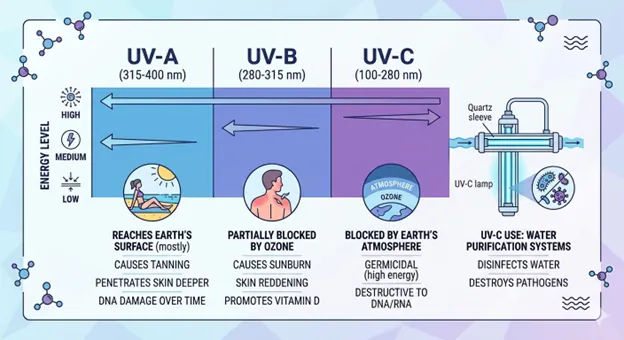
UV purification addresses the microbial side of water safety without heat. UV-C light helps inactivate bacteria, viruses, and protozoa by disrupting their DNA or RNA, preventing them from reproducing. Like boiling, UV is a disinfection method, not a filtration method, so it does not reduce dissolved solids.
Why UV and RO work better together
Each method solves a different water quality challenge:
| Method | What it helps address | What it does not address |
|---|---|---|
| Boiling | Microorganisms | Dissolved solids, chemicals, heavy metals, hardness |
| UV | Microorganisms, without heat | Dissolved solids and chemical contaminants |
| RO | Dissolved salts, heavy metals, and other impurities | Microbial risk on its own |
| UV + RO | Microbial safety and dissolved impurity reduction | Depends on correct system design and maintenance |
A combined UV and RO system can provide a more complete approach to drinking water treatment because it addresses both microbial safety and dissolved contaminants.
The takeaway
Boiling is useful, but it is not a complete water treatment solution. It helps make water microbiologically safer, but it does not remove dissolved solids, chemicals, or heavy metals. For long-term drinking water safety, the right solution depends on what is present in the source water. Where both microbial contamination and dissolved impurities are a concern, UV and RO together provide broader protection.